Tree Trimming for Safer, Healthier-Looking Trees
Ryan’s Tree Service trims trees throughout Lancaster and the surrounding region to address hazardous or broken limbs, improve clearance, manage overgrowth, and help trees fit the property more safely and attractively.
What Can Tree Trimming Accomplish?
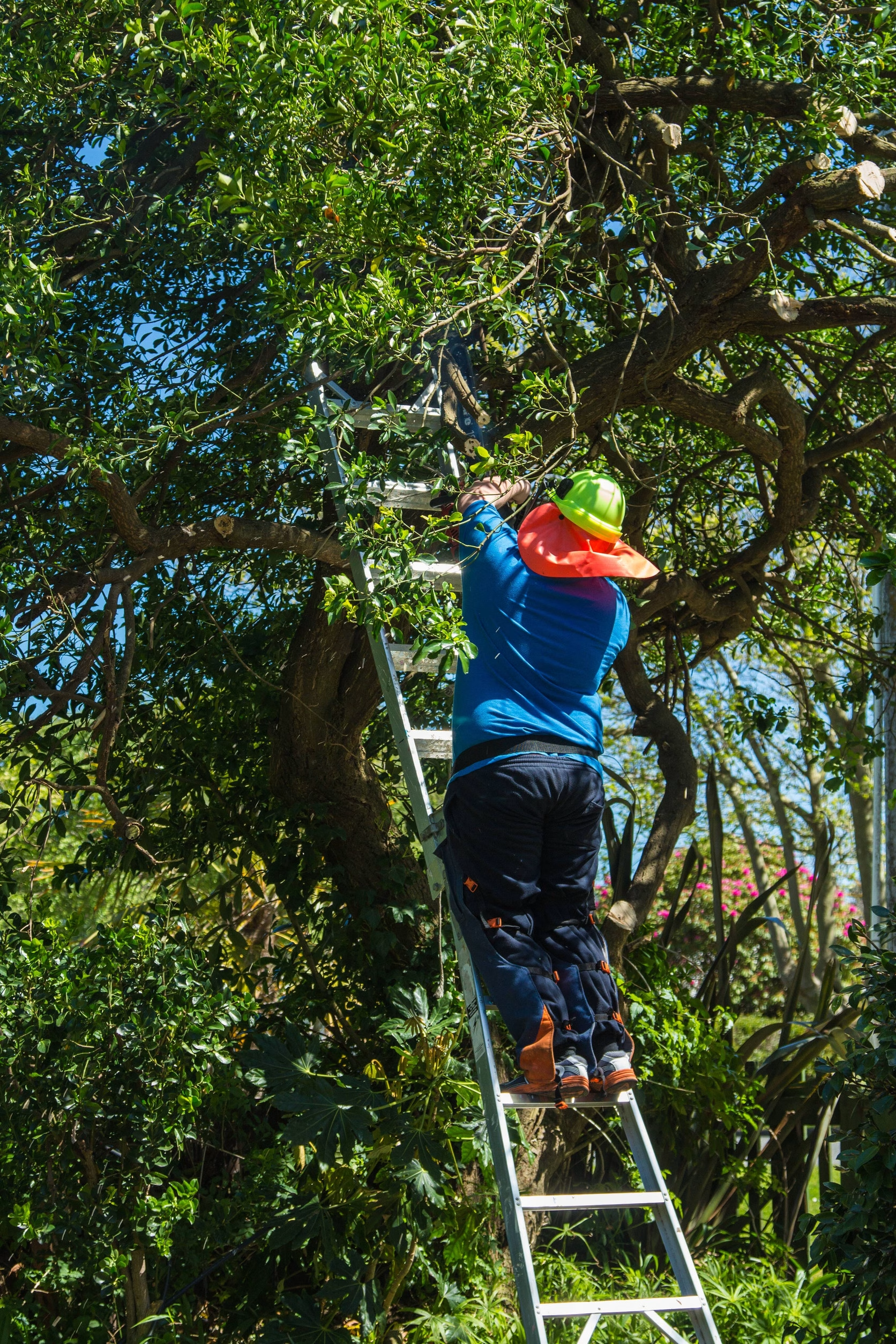
Tree trimming can solve several different problems, but the right approach depends on why the work is needed. A tree may have damaged limbs after a storm, branches growing too close to a structure, low growth blocking access, or an overgrown canopy that needs selective attention.
Customers commonly request tree trimming to:
- Remove dead, broken, hanging, or visibly damaged limbs
- Create clearance from a home, roof, driveway, building, fence, or other part of the property
- Raise low branches that interfere with vehicles, pedestrians, mowing, or the use of an outdoor area
- Reduce selected overgrowth or correct limbs extending into an undesirable area
- Improve the tree’s shape and the overall appearance of the property
- Address storm damage before loose or weakened limbs create a more immediate concern
Ryan’s will discuss the concern you are seeing and evaluate what can reasonably be accomplished through trimming. If the tree appears too compromised for trimming to be the practical answer, Ryan’s can discuss Tree Removal instead.
Trimming Planned Around the Tree and the Property
Ryan remains directly involved, coordinating an experienced crew and matching the work plan and equipment to the conditions on the property. Before work begins, the scope should be clear: which trees are included, what concerns are being addressed, and what cleanup is expected.
Hazardous, Broken, and Storm-Damaged Limbs
Clearance Around Homes and Property
Branches may need selective trimming when they contact or overhang a roof, obstruct a driveway or walkway, interfere with mowing, or extend into an area where better clearance is needed. The objective is to address the specific conflict without removing more growth than the agreed work requires.
Managing Overgrowth and Appearance
What to Expect from the Tree Trimming Process
1
Tell Us What You Are Seeing
2
Review the Tree and Work Area
3
Agree on the Objective
4
Coordinate the Work
5
Complete the Agreed Cleanup
Tree Trimming Is Not the Same as Topping
Topping generally means cutting large branches or the upper canopy back to stubs without regard for the tree’s natural structure. It can leave a tree disfigured and create weak, rapidly growing shoots around the cuts. Routine professional trimming should instead be tied to a clear purpose and a planned selection of limbs.
If you are unsure how much should be removed, explain the problem you want solved rather than prescribing a percentage or asking for the entire top to be cut off. Ryan’s can evaluate the tree and discuss a practical scope.
When Trimming May Not Be Enough
Ryan’s can discuss what is visible during the estimate and whether the requested trimming appears practical. When the condition falls outside what can be determined from a tree-service estimate, the customer may be advised to seek an assessment from a qualified tree-health professional.
Residential, Commercial, and Municipal Tree Trimming
Ryan’s Tree Service works with homeowners, businesses, property managers, and municipalities. Whether the need is one broken limb, clearance around a building, or coordinated trimming across a larger property, the work plan is developed around the site and the agreed objective.
Tree Trimming Questions
When is the best time to trim a tree?
Can you trim branches over a roof or near a building?
Can you trim branches near utility lines?
Tree Trimming in Lancaster and the Surrounding Region
Not sure whether Ryan’s serves your location? Call 803-681-2923 and ask.
Get Your Free Tree Trimming Quote Today
Call Ryan’s Tree Service at 803-681-2923 to discuss what is happening on your property and request a free estimate.