Land Clearing in Great Falls South Carolina
Land Clearing in Great Falls South Carolina
Raw land rarely comes ready to use. Trees, brush, saplings, and stumps cover the ground long before anyone can build, plant, or work the property. Clearing removes that growth and gets the land ready for whatever comes next. Ryan’s Tree Service provides land clearing in Great Falls South Carolina for property owners who need a lot prepared for construction, a pasture brought back from overgrowth, or a wooded parcel opened for a new purpose. In addition, we handle tree removal, crane tree removal, tree trimming, tree pruning, stump grinding, storm cleanup, and emergency tree services throughout the area.
What Land Clearing Actually Involves
Land clearing is the process of removing vegetation from a piece of land to prepare it for a new use. Unlike tree removal, which targets specific trees for safety or health reasons, land clearing addresses everything growing on a defined area. The scope can range from brush and saplings to mature trees with full root systems.
The end goal determines how much work is required. Clearing a building pad requires bare, compacted soil. Clearing a pasture may only need the brush knocked down and the ground made walkable. Clearing a lot for a driveway or utility corridor needs a defined path opened without disturbing the surrounding area.
When You Need Land Clearing
Land clearing becomes necessary when existing vegetation prevents the property from being used for its intended purpose. Common situations include:
-
Preparing a building site. A new home, garage, or outbuilding requires a cleared, graded pad. Trees and stumps must come out of the footprint.
-
Reclaiming overgrown pasture. Fields that have gone years without management become choked with brush, briars, and saplings. Clearing restores them to usable pasture.
-
Opening a wooded lot for development. A wooded parcel may need selective clearing to create building sites, driveways, or utility corridors.
-
Managing a neglected property. Overgrown lots create fire risk, attract pests, and reduce property value. Clearing brings them back under control.
-
Creating recreational space. Trails, food plots, and open areas require clearing vegetation from specific zones.
-
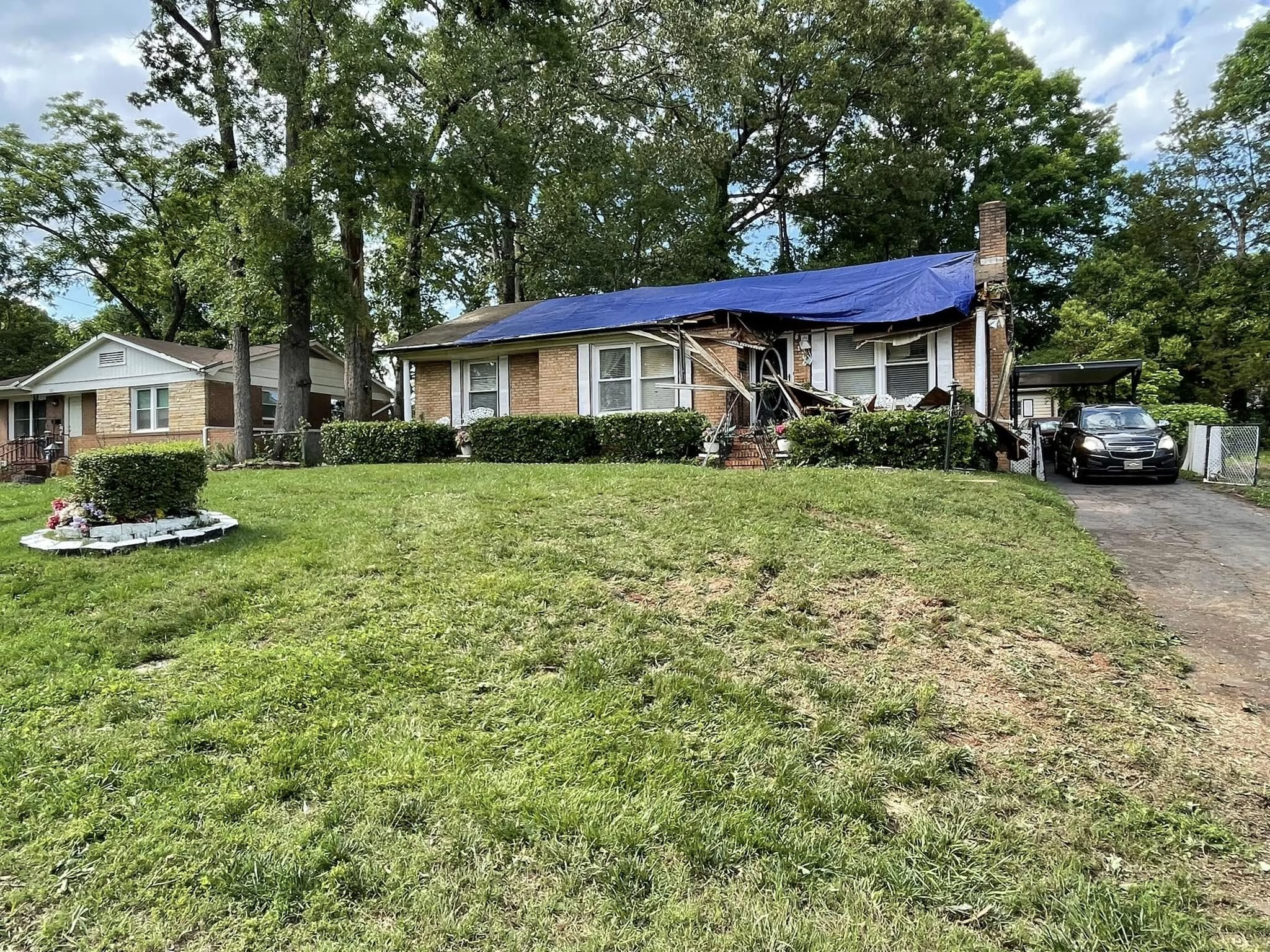
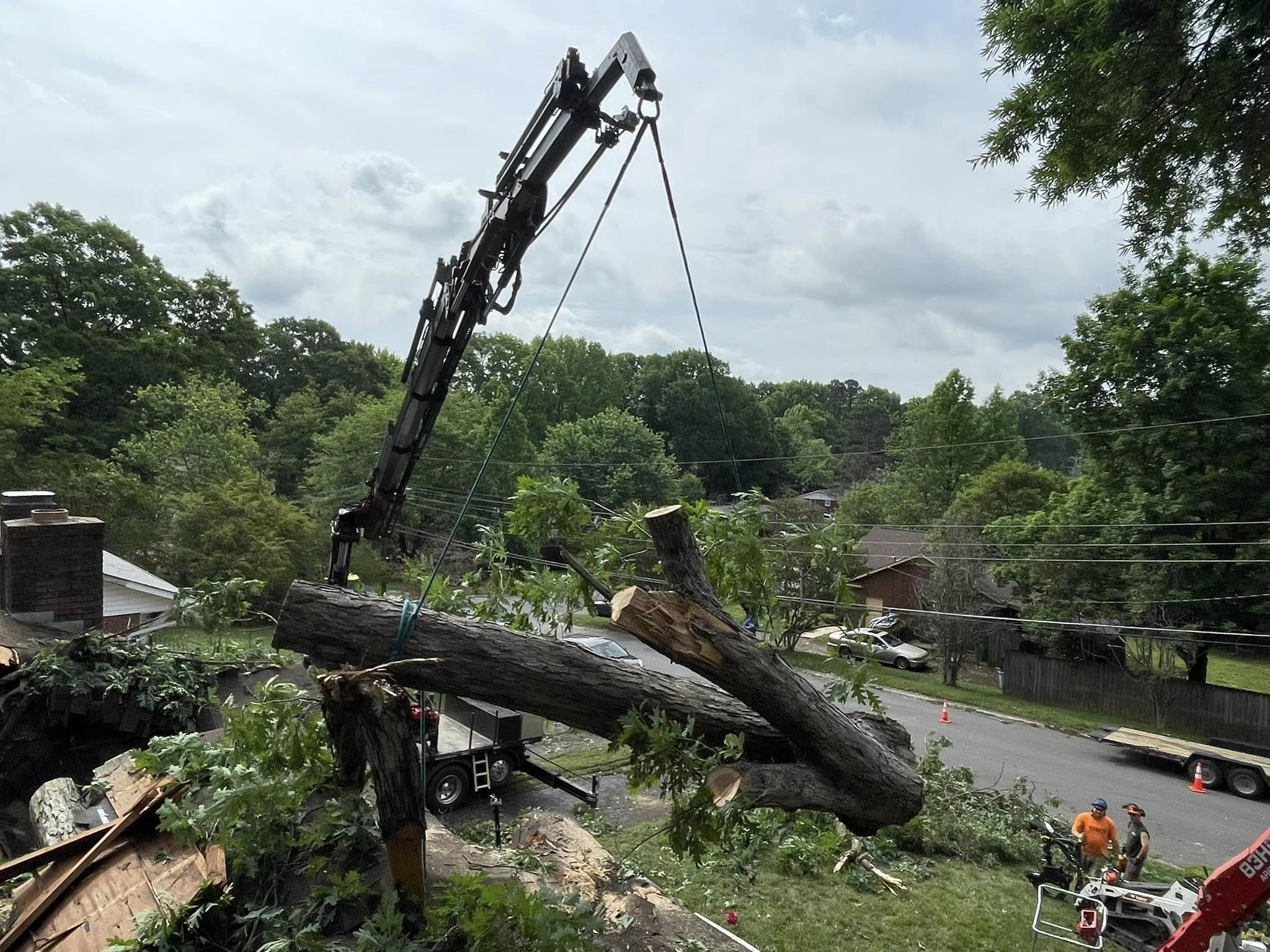
Storm or disaster recovery. After a severe storm, downed trees and debris may require large-scale clearing to restore access or usability.
How the Land Clearing Process Works
Every land clearing project follows a similar sequence, though the specifics depend on the land and the end goal.
Walk-through and scope. We assess the property, identify what needs to come out, and determine the end condition you need. The scope defines what “finished” means for your project.
Method selection. Based on the vegetation and end use, we determine whether mulching, traditional clearing, or a combination works best.
Clearing. The crew removes vegetation using the selected method. Trees are cut or mulched, stumps are ground or dug, and debris is handled according to the plan.
Site preparation. After clearing, we may grade, level, or leave the surface in condition appropriate for the next step. Erosion control measures are installed where required.
Cleanup. Debris is hauled away or left on-site as mulch. The work area is cleared of equipment and materials.
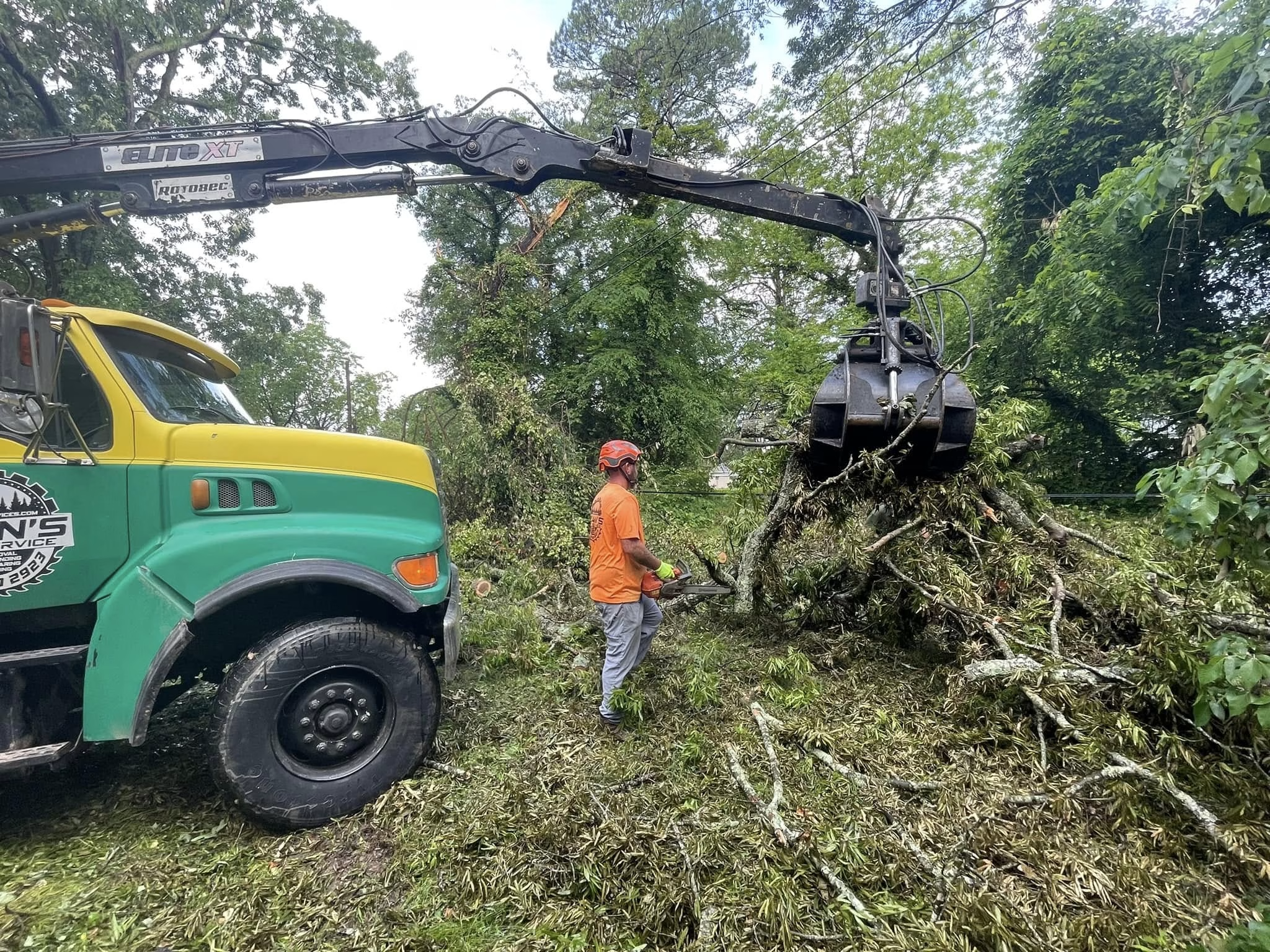
Methods Used for Land Clearing
Two primary methods exist for land clearing, and the right choice depends on what you plan to do with the land afterward.
Forestry Mulching
Forestry mulching uses a machine with a rotating drum to grind trees, brush, and saplings into mulch. The mulch stays on the ground, which controls erosion and suppresses regrowth. This method works well for clearing brushy areas, reclaiming overgrown pastures, and managing lots where bare dirt is not required. Forestry mulching typically costs 20% to 40% less than traditional clear-and-haul work because it eliminates disposal fees .
Mulching works best on vegetation up to about 8 to 10 inches in diameter . It leaves the soil surface covered and stable, which matters on South Carolina’s clay soils where bare ground erodes quickly.
Traditional Clear-and-Haul
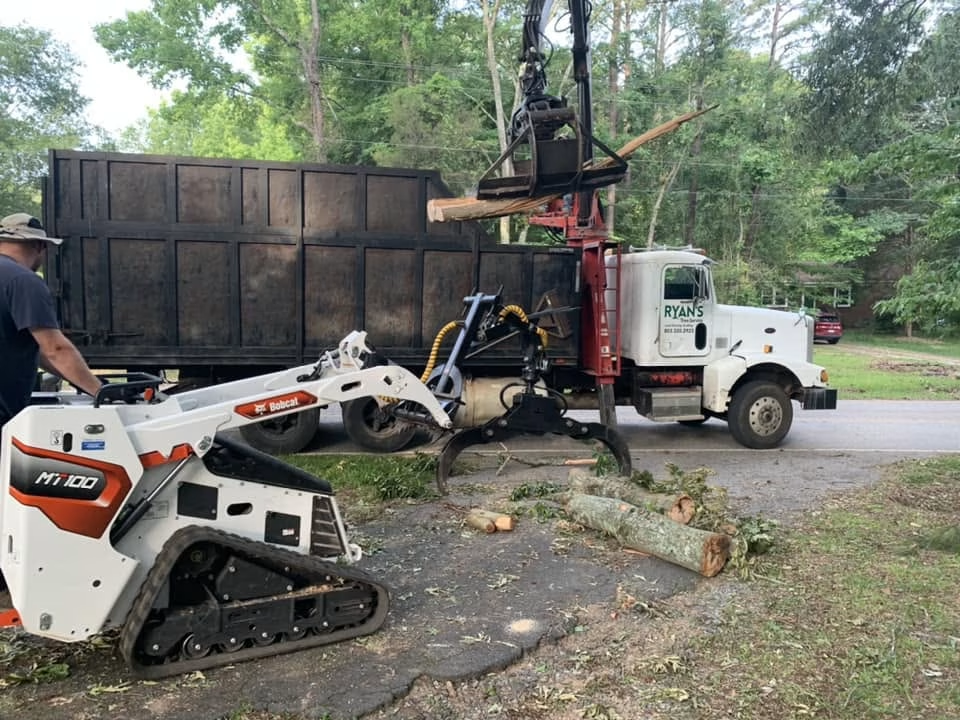
Traditional clearing uses excavators, bulldozers, and haul trucks to remove vegetation and debris from the site. Trees are cut and loaded, stumps are dug or ground out, and material is hauled to a disposal location. This method produces bare dirt, which is necessary for building pads, driveways, ponds, and any construction that requires compacted or graded soil.
Traditional clearing costs more because of equipment time and disposal fees. Off-site disposal can run $20 to $50 per cubic yard depending on material and haul distance . However, for construction sites and any project requiring bare ground, it is the necessary approach.
Many projects use a combination of both methods — mulching the bulk of the acreage while clearing and hauling only the construction footprint .
What to Expect When You Call
1
Describe the Emergency
2
Establish the Immediate Safety Need
3
Review Timing and Access
4
Assess the Site
5
Stabilize or Remove the Hazard
Permit Requirements for Land Clearing in Great Falls South Carolina
Land disturbing activities in South Carolina face regulation at both the state and county level. Knowing what applies to your project prevents delays and penalties.
State Requirements
South Carolina law requires a stormwater management and sediment control plan for land disturbing activities unless specifically exempted . Requirements scale with the size of the disturbance:
-
Two acres or less: A simplified plan is required, but no approval from the implementing agency is needed .
-
More than two acres but less than five acres: A simplified permitting process applies, with plans prepared by a qualified designer. The agency reviews within ten working days .
-
More than five acres: Full stormwater management and sediment control requirements apply, with plans prepared by a qualified designer .
Any land disturbance of one acre or more also requires coverage under the NPDES Construction General Permit . The federal NPDES permit coverage costs $125 .
County Requirements
Individual counties may have additional requirements. York County, for example, requires an NPDES permit for certain land disturbance activities and charges land disturbance fees of $250 per disturbed acre plus a $125 SCDHEC NPDES permit fee . Land disturbance cannot begin until the NPDES permit is issued .
Always verify permit requirements with your local planning or development department before starting any clearing work.
Factors That Affect Land Clearing Cost
No two clearing jobs cost the same. Several variables shape the final price:
-
Vegetation density and size. Light brush clears for less than mature hardwoods. The more trees and the larger they are, the more time and equipment the job requires .
-
Total acreage. Per-acre rates drop on larger jobs because mobilization and setup costs spread across more ground .
-
Disposal method. Mulching on-site is cheaper than hauling debris away. Off-site disposal can add $500 to $1,500 or more per acre .
-
Stump handling. Grinding stumps below grade costs less than digging and hauling root balls, which matters if you plan to build on the footprint .
-
Terrain and access. Slopes, wet ground, rock, and tight access slow equipment and increase cost .
-
End condition. Clearing to bare dirt costs more than leaving a mulch layer. Grading, leveling, and erosion control add to the total .
-
Permits and fees. Stormwater plans, NPDES permits, and county fees add to the overall project cost.
We provide estimates based on what we see at the property. Aerial photos and phone descriptions cannot capture what is actually on the land .
Why Professional Land Clearing Matters
Land clearing involves heavy equipment, falling trees, underground utilities, and environmental regulations. Mistakes can be expensive:
-
Damaged utilities. Cutting or digging without knowing where lines run can cause injury, service outages, and costly repairs.
-
Erosion problems. Cleared ground without proper erosion control can wash out, clog drainage, and create regulatory violations .
-
Wrong method for the end use. Clearing with the wrong approach can leave ground unsuitable for its intended purpose, requiring rework.
-
Safety risks. Falling trees, equipment rollovers, and debris hazards make this work dangerous without training and proper equipment.
Professional crews have the equipment, experience, and knowledge of local regulations to clear land safely and correctly.
Related Services
Crane removal is one part of the tree care we provide. Other services include tree removal, land clearing, tree trimming, tree pruning, stump grinding, storm cleanup, and emergency tree services.
If you have a tree that needs a crane, contact us to discuss the situation and schedule an assessment.
FAQs About Land Clearing in Great Falls South Carolina
What is the difference between land clearing and tree removal?
Tree removal targets specific trees for safety or health reasons. Land clearing removes all vegetation from a defined area to prepare it for a new use. They are related but serve different purposes.
What is forestry mulching?
Forestry mulching uses a machine to grind trees and brush into mulch that stays on the ground. It is faster and less expensive than traditional clearing and works well for brushy areas, pasture reclamation, and lots where bare dirt is not required .
Do I need a permit for land clearing in Great Falls South Carolina?
South Carolina requires a stormwater management and sediment control plan for most land disturbing activities . Requirements depend on the size of the disturbance. Two acres or less needs a simplified plan. More than five acres requires full plans and approval. Any disturbance of one acre or more also needs NPDES permit coverage . Some counties have additional requirements. Always verify with your local planning department.
How much does land clearing cost per acre?
Costs vary widely based on vegetation, terrain, and disposal method. South Carolina land clearing typically ranges from $1,500 to $5,000 or more per acre depending on density . On-site mulching is cheaper than clear-and-haul. Larger acreage reduces per-acre pricing .
How long does land clearing take?
A half-acre residential lot may clear in a day. Five acres of moderate vegetation can take several days to a week depending on density and site conditions . Larger or more complex projects take longer.
Can I clear land myself?
Clearing small brush with hand tools is possible for a homeowner. Removing trees, operating heavy equipment, and handling regulated land disturbance require training and proper equipment. The safety and regulatory risks make professional clearing the appropriate choice for most projects.
What happens to the trees and brush after clearing?
Options include mulching on-site, hauling debris away, or leaving some material for the landowner’s use. The right choice depends on your end goal and budget. We discuss disposal during the estimate .
Get Your Free Emergency Tree Service Quote Today
Call Ryan’s Tree Service at 803-320-2923 to discuss what is happening on your property and request a free estimate.