Crane Tree Removal
Crane Tree Removal
When a large tree leans over your roof, tangles in power lines, or becomes too unstable for a climber to safely work in, crane-assisted removal is often the only responsible way to bring it down. Ryan’s Tree Service uses cranes to lift heavy tree sections straight up and away from structures, vehicles, and landscaping instead of dropping or rigging them past obstacles. Because of this, we can handle jobs that conventional crews cannot. We provide tree removal, land clearing, tree trimming, stump grinding, and storm cleanup across Rock Hill, Fort Mill, Lancaster, and the surrounding South Carolina and North Carolina communities.
What Crane-Assisted Tree Removal Is
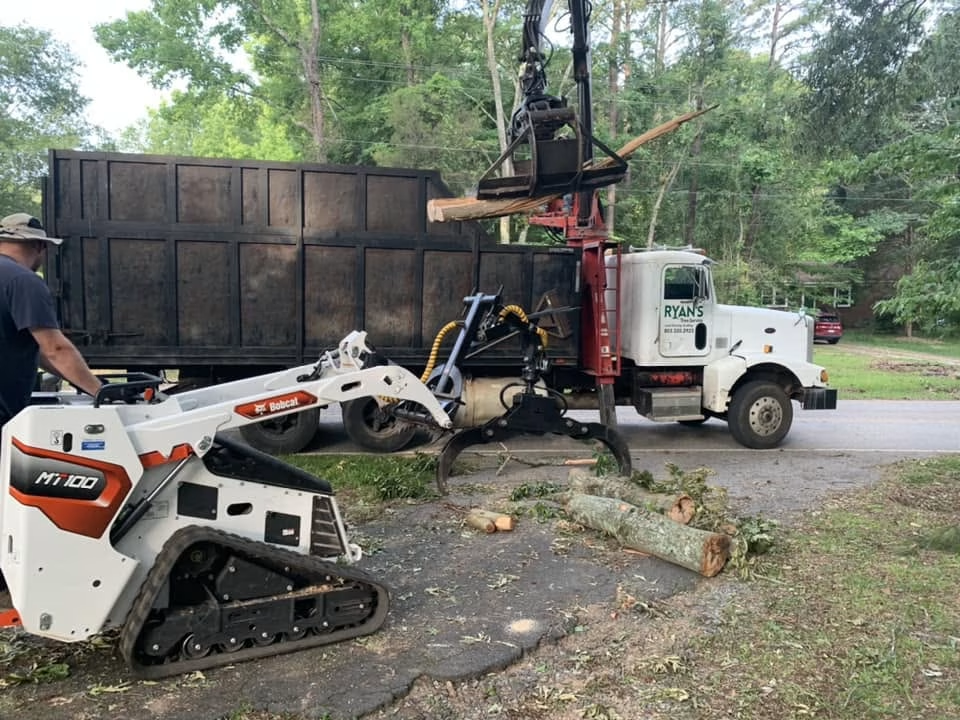
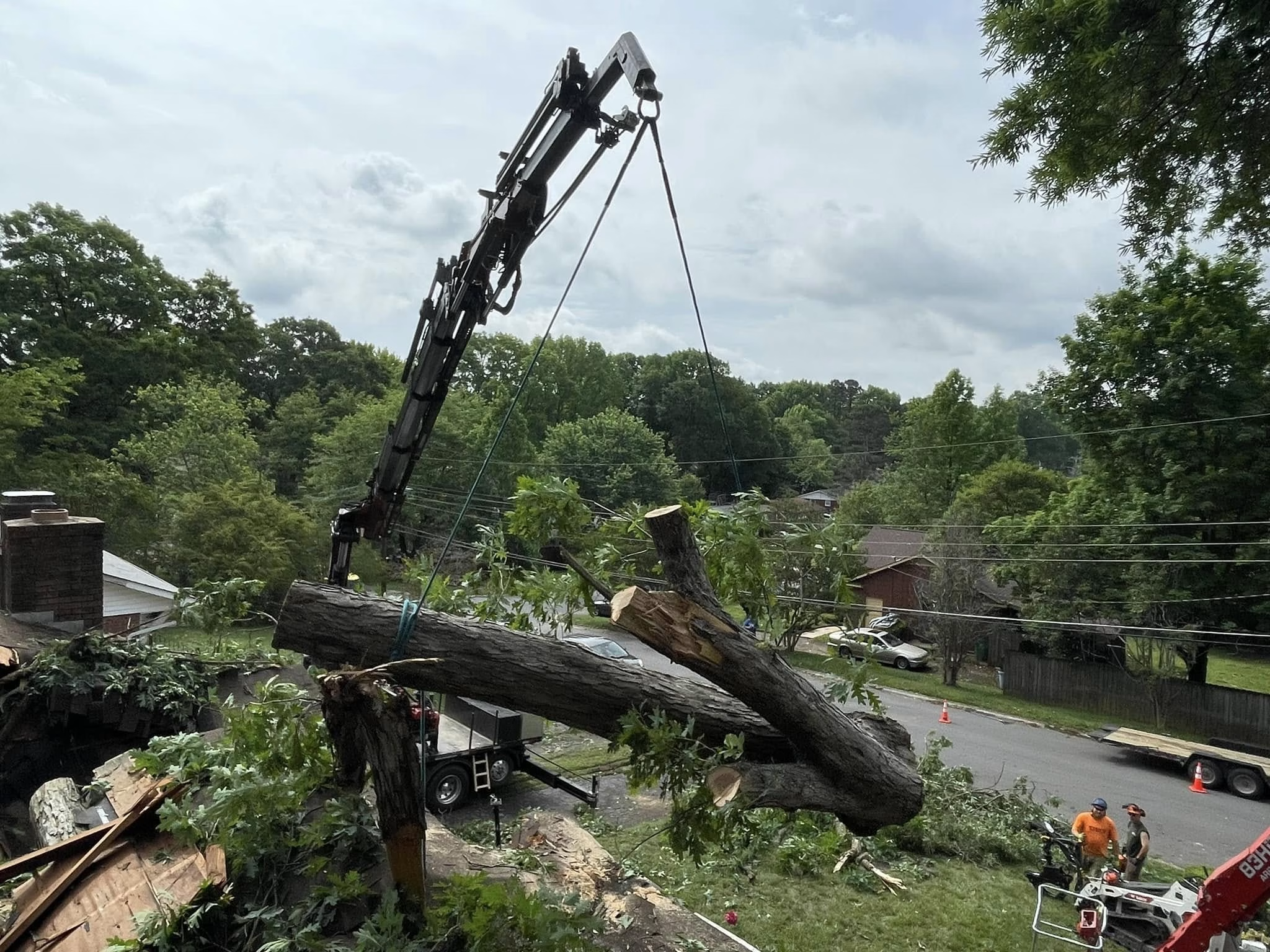
Crane-assisted tree removal means taking down a tree in sections while a crane supports and lifts each piece. Instead of cutting a section and controlling its fall with ropes, the crane takes the weight of the section before the cut happens. Once the cut is complete, the crane lifts the section vertically and swings it to a clear processing area.
This method changes what is possible when there is no safe place for a piece of the tree to land. If a tree stands surrounded by a house, fence, pool, or driveway, a conventional crew has nowhere to drop material. However, a crane creates a path upward and outward that does not exist otherwise.
How the Process Works
Every crane removal follows a similar sequence, though the specifics depend on the tree and the property.
Assessment and planning. We look at the tree’s size, condition, lean, and the surrounding obstacles. We determine where the crane will stand, where each section will go, and the order in which sections will come down. We develop this plan before any equipment arrives.
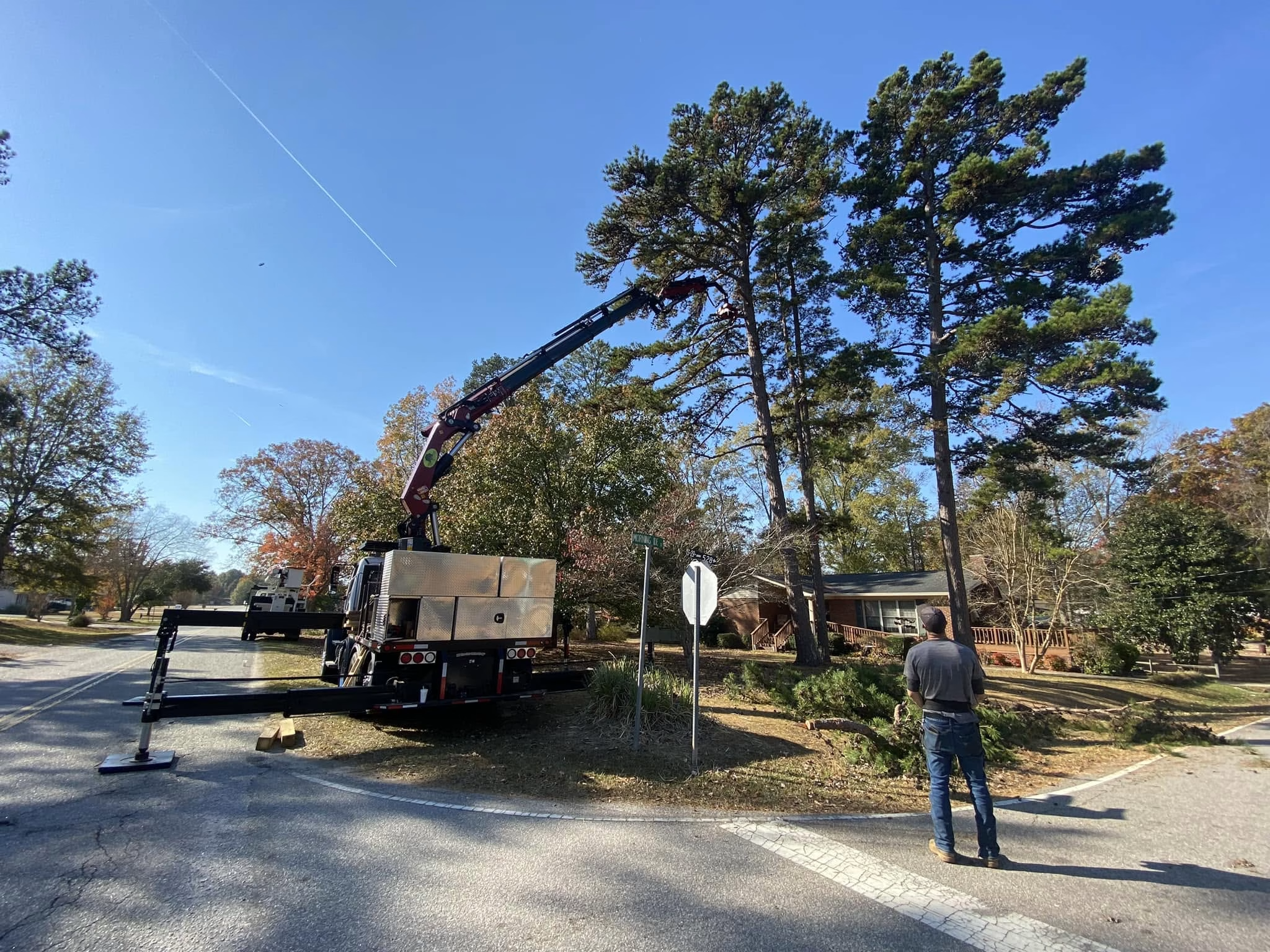
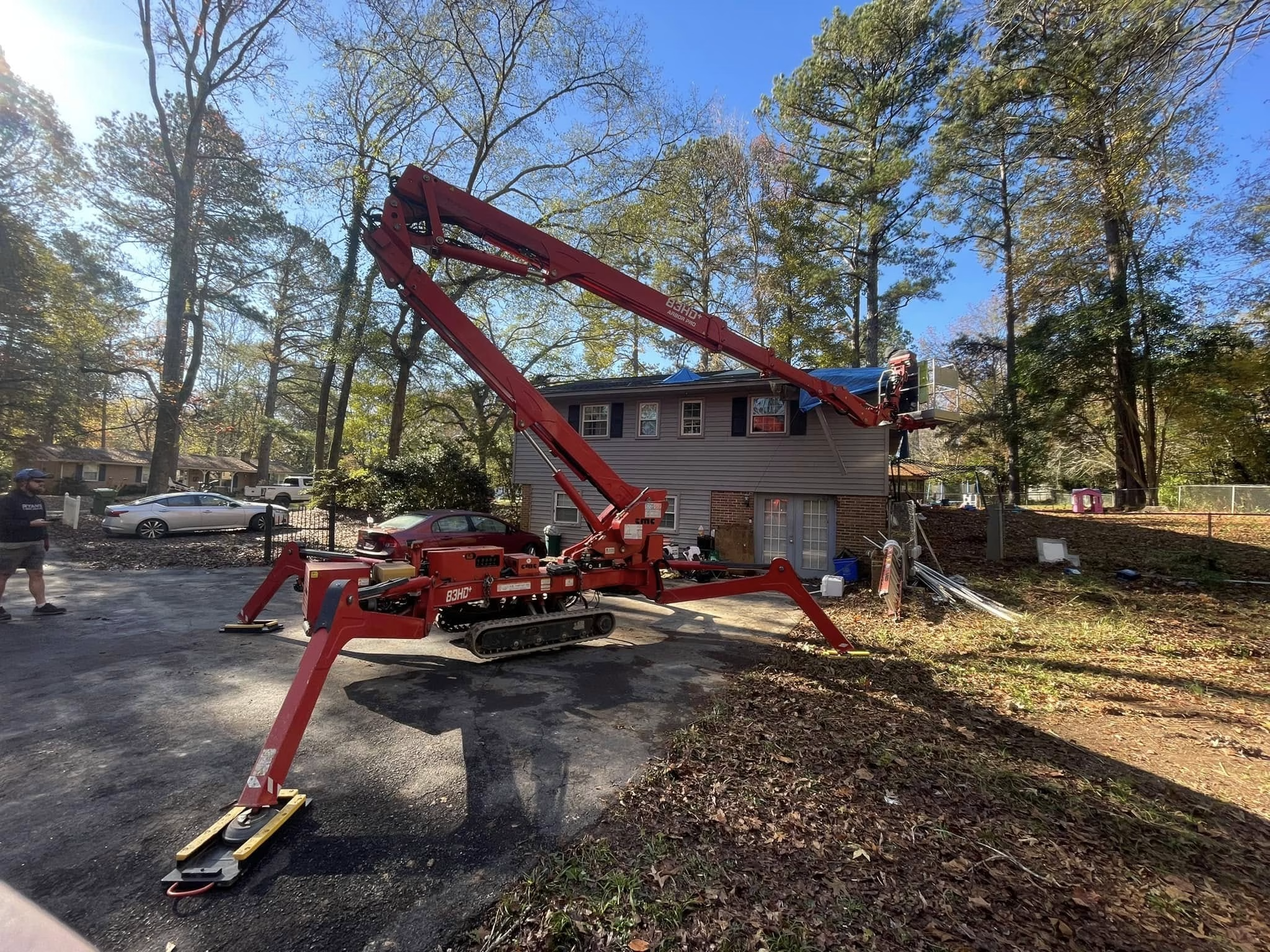
Crane setup. We position the crane on stable ground, often on a driveway or street. Outriggers deploy to distribute the weight. The crane operator and the tree crew establish communication.
Sectional removal. Working from the top down, the crew attaches rigging to a section, the crane takes tension, and then the crew cuts the section. The crane lifts it clear and moves it to the processing area. This repeats until the trunk is reduced to a stump.
Cleanup. We chip, haul away, or leave brush and logs on-site depending on your preference. Then we rake and clear the work area.
Crane Removal vs. Conventional Removal
| Conventional Removal | Crane-Assisted Removal | |
|---|---|---|
| Best for | Trees with clear drop zones, healthy structure, good access | Large trees, tight spaces, compromised trees, trees over structures |
| Climber in tree | Yes, typically | May still climb, but crane supports the load |
| Drop zone needed | Yes, for each section | No, sections are lifted out |
| Speed on complex jobs | Slower due to more cuts and rigging | Often faster on large trees |
| Equipment cost | Lower | Higher (crane rental/operation) |
The higher cost of crane work reflects the additional equipment and coordination required. On a genuinely difficult tree, the crane is not a luxury — it is the tool that makes the job possible without unacceptable risk.
Why a Crane May Be Necessary for Your Tree
Most tree removals work fine with climbing, rigging, and a bucket truck. However, some trees present problems that conventional methods cannot safely solve. The following situations call for a crane as the appropriate tool rather than an optional upgrade.
The Tree Is Structurally Compromised
A tree with advanced decay, hollow sections, or root failure cannot hold a climber or rigging anchors safely. Climbing a dead or dying tree ranks among the most dangerous situations in tree work because the wood may fail under the climber’s weight or during a cut. Therefore, a crane removes the need to put a person in the tree at all. Because the crane supports each section from above, the crew never relies on the tree’s own weakened structure.
There Is No Safe Drop Zone
If every direction around the tree contains a structure, fence, utility line, or valuable landscape feature, there is nowhere for a cut section to fall or be lowered. This situation is common in tight residential lots, backyard courtyards, and trees growing between buildings. Consequently, a crane can lift sections over the obstacles and set them down in a driveway, street, or other clear area.
The Tree Is Very Large in a Confined Space
A mature oak or pine in a small yard requires many small cuts to keep pieces manageable on ropes. That means more time, more cuts, and more risk near the structure. However, a crane can lift much larger sections — sometimes several hundred pounds at a time — which reduces the number of cuts and the amount of time the crew spends working near your home.
The Tree Is Over or Near Power Lines
Trees growing into or over utility lines require extreme precision. When a section cannot touch a line during removal, a crane provides directional control that rope rigging cannot always match. For example, the crane can lift a section vertically clear of the wires before swinging it away. If a tree touches a power line, do not approach it. Call your utility company first. Only qualified line-clearance professionals should work near energized lines.
The Tree Is Storm-Damaged or Hung Up
After a storm, you may have a tree that is partially uprooted, leaning against another tree, or resting on a roof. These rank among the most unpredictable situations in tree work. The tree may be under tension in ways that are not obvious, and cutting it incorrectly can cause it to shift suddenly. Therefore, a crane allows the crew to stabilize the tree and control each piece before cutting it free
What to Expect When You Call
1
Describe the Emergency
2
Establish the Immediate Safety Need
3
Review Timing and Access
4
Assess the Site
5
Stabilize or Remove the Hazard
Factors That Affect the Scope and Cost
Every tree is different. The cost of crane-assisted removal depends on:
-
Tree size and height. Larger trees mean heavier sections and potentially a larger crane.
-
Condition of the tree. Dead, hollow, or storm-damaged trees require more caution and may need additional rigging.
-
Access and crane positioning. If the crane can set up close to the tree, the job is simpler. If it needs to reach over a house from the street, that adds complexity.
-
Proximity to structures and utilities. The closer the tree is to something that cannot be damaged, the more carefully and slowly the work must proceed.
-
Cleanup and debris removal. Hauling away all material costs more than leaving wood on-site.
-
Stump grinding. Stump grinding typically costs extra as a separate line item.
-
Permits. Rock Hill requires a tree removal permit for trees with a trunk diameter of 8 inches or more, or for designated heritage or protected species. Work within a public right-of-way requires a separate permit from the City of Rock Hill Public Works Department.
We provide estimates based on what we see at the property. There is no accurate way to quote a crane job over the phone without understanding the specific tree, its condition, and the surrounding constraints.
What to Ask Before Hiring a Crane Tree Service
Before you commit to any company for crane-assisted removal, it is reasonable to ask:
-
Do you own or rent the crane, and who operates it?
-
Is the crane operator experienced specifically with tree work, not just general lifting?
-
Are you insured for property damage, personal liability, and workers’ compensation?
-
Will you provide a written estimate that clearly states what is included and what is not?
-
Is stump grinding included or extra?
-
Who is responsible if damage occurs during the work?
-
Will you handle any required permits, or is that my responsibility?
A legitimate crane tree service will answer these questions directly and without hesitation.
Areas We Serve
Ryan’s Tree Service provides crane-assisted tree removal and related services across the following communities:
Related Services
Crane removal is one part of the tree care we provide. Other services include tree removal, land clearing, tree trimming, tree pruning, stump grinding, storm cleanup, and emergency tree services.
If you have a tree that needs a crane, contact us to discuss the situation and schedule an assessment.
Frequently Asked Questions About Crane Tree Removal
How do I know if my tree needs a crane?
A crane is typically needed when there is no safe drop zone, the tree is too compromised for a climber, the tree is very large in a tight space, or the tree is over a structure or power line. If a conventional crew cannot safely control each section with ropes, a crane is the right tool. The only reliable way to know is an on-site assessment.
Is crane tree removal more expensive than regular removal?
Yes, usually. A crane involves additional equipment, an operator, and more planning. On a simple tree with a clear drop zone, conventional removal is less expensive. On a complex tree where conventional removal would be slow, risky, or impossible, the crane can actually reduce total labor time and risk. The cost difference reflects what the job requires.
Can a crane remove a tree without damaging my lawn or driveway?
In many cases, yes. Cranes are often set up on driveways or streets with outrigger pads to distribute weight. Sections are lifted over the lawn rather than dragged across it. Some ground disturbance is possible depending on the crane size and ground conditions, but a properly planned job minimizes impact. Discuss your concerns during the estimate so the crew can plan accordingly.
Will the crane fit in my yard or driveway?
Crane size depends on the tree and the reach required. Some cranes are truck-mounted and need a substantial driveway or street position. Others are larger and require more setup space. The assessment determines which crane is appropriate. If access is very tight, there may still be options, but they need to be evaluated on-site.
Does crane removal include stump grinding?
Usually not. Stump grinding is typically a separate line item. You can add it to the scope so the stump is removed below ground level after the tree is down. If you do not want the stump ground, the crew can cut it flush with the ground and leave it.
How long does a crane removal take?
A straightforward crane removal can often be completed in a single day. Larger or more complex trees may take longer. The exact time depends on the tree’s size, the number of sections, the crane’s reach, and how much cleanup is required.
Is crane removal safe for my roof and siding?
Crane removal is specifically chosen when there is risk to structures. The crane supports each section before it is cut, so nothing is allowed to fall or swing into the house. This is one of the main reasons a crane is used. The planning process identifies the path each section will take, and the crane operator follows that path.
Do you handle permits for crane tree removal?
Permit requirements vary by location. Rock Hill, for example, requires a permit for removing trees of a certain size or protected species. Some work in public rights-of-way also requires a permit. Ask during the estimate who is responsible for obtaining any required permits, and confirm that in writing.
What happens to the wood and brush after removal?
Options typically include chipping and hauling everything away, leaving cut firewood on-site, or leaving all material in a designated area. This is discussed during the estimate so there are no surprises. Hauling everything away usually costs more than leaving material on-site.
Get Your Free Emergency Tree Service Quote Today
Call Ryan’s Tree Service at 803-320-2923 to discuss what is happening on your property and request a free estimate.