
Tree Pruning in Edgemoor South Carolina
Ryan’s Tree Service trims trees throughout Lancaster and the surrounding region to address hazardous or broken limbs, improve clearance, manage overgrowth, and help trees fit the property more safely and attractively.
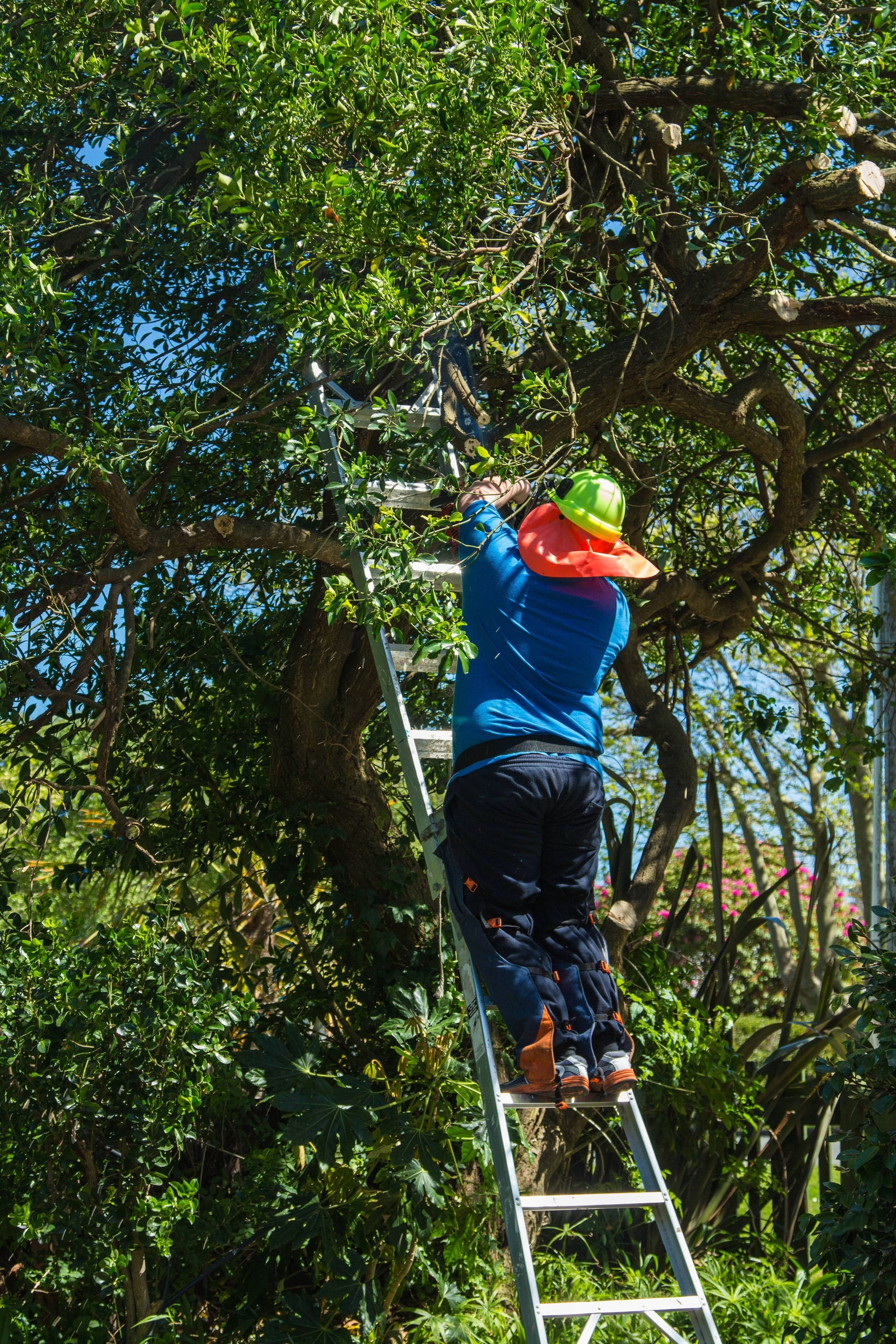
Tree Pruning in Edgemoor South Carolina
A tree that never gets pruned does not stay healthy on its own. Dead limbs accumulate, branches rub together and create wounds, and the canopy becomes so dense that air and light cannot reach the interior. Tree pruning addresses these problems before they shorten the tree’s life or create a hazard. Ryan’s Tree Service provides professional tree pruning in Edgemoor South Carolina for homeowners and property managers who want their trees maintained for health, structure, and safety. In addition, we handle tree removal, crane tree removal, land clearing, tree trimming, stump grinding, storm cleanup, and emergency tree services throughout the area.
What Tree Pruning Actually Is
Pruning is the selective removal of specific branches to improve a tree’s health, structure, or safety. Unlike trimming, which focuses on appearance and clearance, pruning addresses the tree’s internal condition. The goal is to remove what is harming the tree or creating risk while preserving what supports its growth.
Proper pruning does not mean cutting a tree back to stubs or shaping it into a hedge. It means making deliberate cuts that work with the tree’s natural growth patterns. A properly pruned tree maintains its natural form and becomes stronger over time.
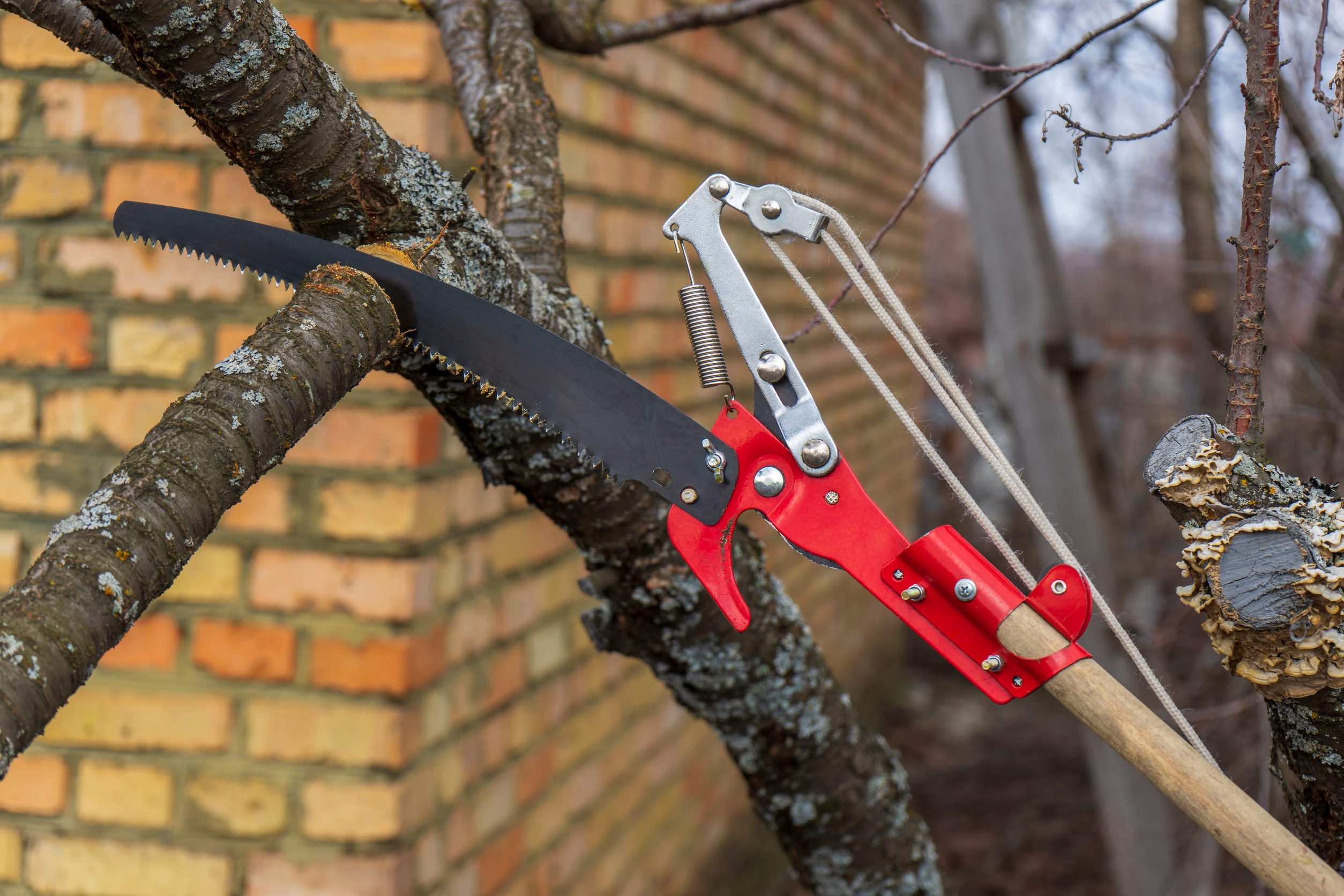
How Pruning Differs From Trimming
Many people use the terms pruning and trimming interchangeably, but they are not the same. Understanding the difference helps you know what your tree actually needs.
Pruning focuses on the tree’s health and structure. It involves removing dead, diseased, or damaged branches, thinning out dense growth to improve air circulation, and making cuts that encourage strong structural development. Pruning is done for the tree’s benefit .
Trimming focuses on appearance and clearance. It involves cutting back overgrowth to maintain a certain size or shape, clearing branches away from roofs or walkways, and keeping the tree looking tidy. Trimming is done for the property owner’s benefit .
Both services have value. A tree may need both in the same visit. However, the techniques and objectives are different.
Signs Your Edgemoor South Carolina Trees Need Pruning
Trees do not announce when they need attention. Instead, they show signs that are easy to overlook until a problem becomes obvious. Watch for these indicators:
-
Dead or dying branches. Deadwood is unpredictable and can fall without warning. It also indicates the tree is under stress.
-
Diseased branches. Visible cankers, fungal growth, or discolored wood should be removed to prevent disease from spreading.
-
Branches rubbing together. Friction creates wounds that invite insects and disease.
-
Dense canopy. A tree so thick that light cannot penetrate the interior may need thinning to improve air circulation.
-
Crossing or codominant branches. Branches growing at sharp angles or competing for the same space can create weak unions that fail under stress.
-
Storm damage. Broken or cracked limbs that survived a storm but did not fall still pose a risk.
-
Overhanging limbs. Branches growing toward structures or walkways may need to be removed for clearance.
If any of these describe your trees, a pruning assessment will clarify what the tree needs.
Proper Pruning Techniques
Pruning correctly matters more than most people realize. A bad cut can create a wound the tree cannot seal, inviting decay that persists for years. Proper pruning follows established techniques that work with the tree’s biology.
The Branch Collar
When removing a branch, the cut should be made just outside the branch collar — the swollen area where the branch meets the trunk. Cutting flush against the trunk removes the collar and creates a large wound. Leaving a stub also causes problems because the tree cannot seal the dead wood. The correct cut is at the branch collar, allowing the tree to compartmentalize the wound naturally .
The Three-Cut Method for Larger Branches
For branches larger than an inch in diameter, a single cut can tear bark down the trunk. The three-cut method prevents this:
-
First cut: Make a small undercut about a foot from the branch union, cutting halfway through from below.
-
Second cut: Cut through the branch a few inches beyond the first cut, removing the weight of the branch.
-
Final cut: Remove the remaining stub by cutting just outside the branch collar .
This method protects the trunk from bark tearing and allows the tree to seal the final wound.
What Not to Do
Do not top trees. Topping cuts branches back to stubs at random points. The tree responds by growing rapid, weakly attached shoots that are prone to breaking. Topping damages the tree’s structure and can shorten its life .
Do not make flush cuts. Cutting into the branch collar removes the tree’s natural defense zone and creates a larger wound that seals poorly .
Do not leave stubs. A stub the tree cannot seal becomes an entry point for decay and insects .
Do not over-prune. Removing too much foliage at once stresses the tree and reduces its ability to produce food. Pruning should be done in moderation, especially on mature trees .
What to Expect from the Tree Trimming Process
1
Tell Us What You Are Seeing
2
Review the Tree and Work Area
3
Agree on the Objective
4
Coordinate the Work
5
Complete the Agreed Cleanup
When to Prune in South Carolina
Timing affects how a tree responds to pruning. In South Carolina, late winter to early spring (typically February through March) is generally the best window for most deciduous trees. At that point, the tree is still dormant, the branch structure is visible without leaves, and the tree has a full growing season ahead to seal wounds .
Some species have specific timing needs. Oaks should not be pruned from March through October in areas where oak wilt is a concern. Maple pruning is often best in mid-summer to reduce sap bleeding . Dead, damaged, or hazardous branches are the exception — they should come off regardless of season because safety does not wait for the ideal window .
What Happens During a Pruning Service
A professional pruning service follows a consistent process, though the specific cuts vary by tree.
Assessment. We look at the tree’s species, overall health, growth pattern, and how it interacts with its surroundings. The goal is to understand what the tree needs, not just what looks overgrown.
Prioritizing cuts. Not every branch that could be cut should be cut. A tree needs enough foliage to produce food. We remove what needs to go and leave what the tree needs to stay healthy.
Making the cuts. We use proper techniques — branch collar cuts for smaller branches and the three-cut method for larger limbs. The objective is to leave wounds the tree can seal.
Cleanup. Branches are chipped, hauled away, or left on-site based on your preference. The work area is raked and cleared.
Factors That Affect Pruning Cost
Several variables shape what a pruning job costs:
-
Tree size and height. Larger trees require more time and equipment.
-
Number of trees. A single tree costs less than a full property of trees needing work.
-
Access. Trees near structures or in tight spaces take longer to work around safely.
-
Condition. Dead or storm-damaged branches add risk and complexity.
-
Cleanup requirements. Hauling away all debris costs more than leaving material on-site.
-
Scope of pruning. Removing a few dead limbs costs less than a full structural pruning of a large tree.
We provide estimates based on what we see at the property. Phone quotes cannot account for the specific tree and its surroundings.
Why Professional Pruning Matters
Improper pruning causes damage that lasts for years. A tree with flush cuts, stubs, or topped branches will struggle to seal wounds, inviting decay and insects. The tree may survive but become structurally weaker and more prone to failure. Hiring a professional who understands tree biology and proper techniques protects your tree and your property.
Why Edgemoor South Carolina Property Owners Contact Ryan’s Tree Service
Ryan’s Tree Service serves Edgemoor South Carolina and surrounding communities with tree pruning, tree trimming, tree removal, and related tree care. If your trees need pruning for health, structure, or safety, contact us to discuss the situation and schedule an assessment.
FAQs About Tree Pruning in Edgemoor South Carolina
How often should trees be pruned?
Most mature trees benefit from a pruning cycle of every three to five years. Younger trees are often pruned every two to three years to establish strong structure. The right frequency depends on the species, growth rate, and health of the tree .
What is the best time to prune trees in Edgemoor South Carolina?
Late winter to early spring is generally best for most deciduous trees. Dead, damaged, or hazardous branches should be removed whenever they are noticed, regardless of season .
Can I prune trees myself?
Small branches on small trees are sometimes manageable for a homeowner. Larger limbs, anything near power lines, and work that requires climbing or working at height should be left to professionals. The risk of injury and property damage is too high for most DIY pruning.
What is the difference between pruning and trimming?
Pruning focuses on the tree’s health and structure — removing dead, diseased, or damaged branches and improving growth patterns. Trimming focuses on appearance and clearance — cutting back overgrowth to maintain shape or clear space .
Is topping a tree ever acceptable?
No. Topping is harmful and is not an accepted practice in tree care. It creates weak regrowth, damages structure, and can shorten the tree’s life. Proper pruning uses selective cuts that work with the tree’s natural growth .
Why does pruning cost more than trimming?
Pruning often requires more skill and time than trimming. Proper pruning requires understanding tree biology, identifying which branches to remove, and making cuts that the tree can seal. The objective is to improve the tree’s health, not just change its appearance.
Other Tree Services We Offer
Pruning is one part of what we do. We also handle tree removal, crane tree removal, land clearing, tree trimming, stump grinding, storm cleanup, and emergency tree services.
Areas We Serve
Ryan’s Tree Service also provides tree pruning in these nearby communities:
Get Your Free Tree Trimming Quote Today
Call Ryan’s Tree Service at 803-320-2923 to discuss what is happening on your property and request a free estimate.