Tree Trimming in Fort Mill South Carolina
Ryan’s Tree Service trims trees throughout Lancaster and the surrounding region to address hazardous or broken limbs, improve clearance, manage overgrowth, and help trees fit the property more safely and attractively.
Tree Trimming in Fort Mill South Carolina
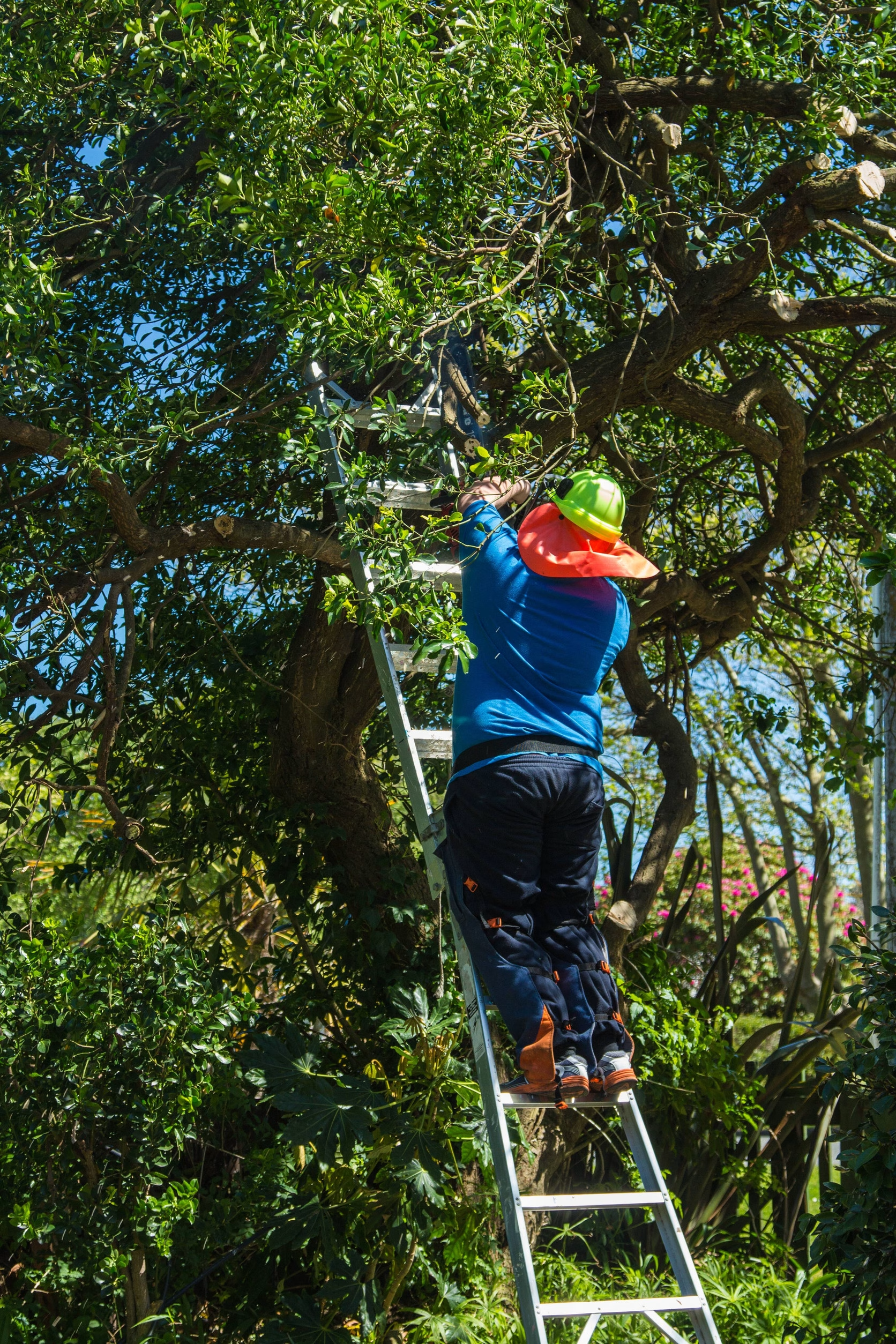
Overgrown trees cause problems that build slowly until one day a limb scrapes your roof, blocks your driveway, or hangs low over the sidewalk. Tree trimming keeps trees healthy and prevents the kind of growth that leads to property damage or safety hazards. Ryan’s Tree Service provides tree trimming in Fort Mill South Carolina for homeowners and property managers who want their trees maintained properly, not just cut back. In addition, we offer tree removal, crane tree removal, land clearing, tree pruning, stump grinding, storm cleanup, and emergency tree services throughout the area.
What Tree Trimming Actually Involves
Tree trimming focuses on controlling growth and shaping a tree’s canopy. The goal is to remove branches that have grown into places they should not be — over a roof, across a driveway, into utility lines, or low enough to hit someone walking underneath.
Trimming differs from pruning in emphasis. Trimming usually addresses size, shape, and clearance. Pruning focuses on the tree’s internal health and structure by removing dead, diseased, or weak branches. However, a good tree service often does both in the same visit because the tree benefits from a combination of clearance work and health-focused cuts.
Signs Your Fort Mill South Carolina Trees Need Trimming
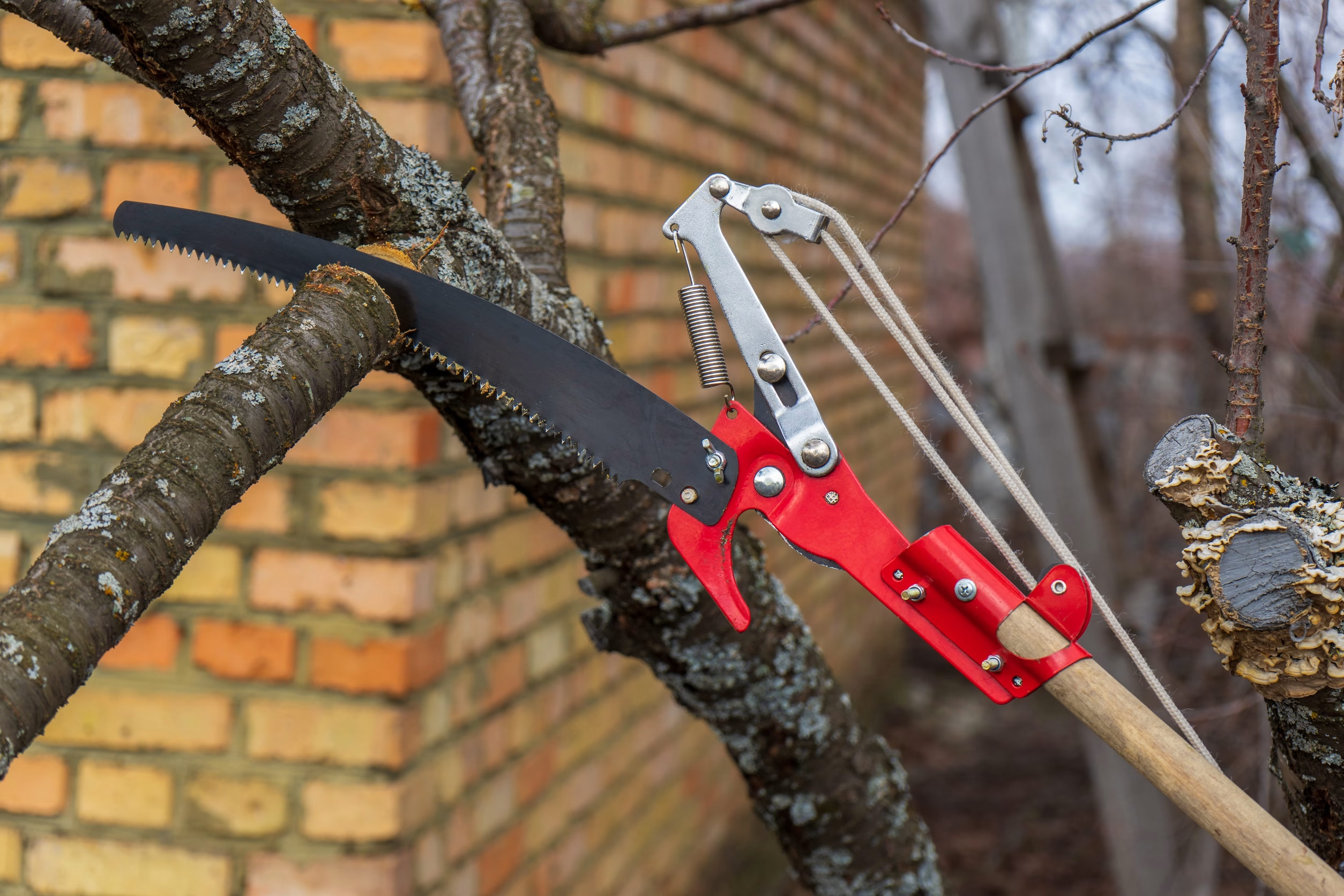
Trees do not announce when they need attention. Instead, they show gradual signs that are easy to overlook until the problem becomes obvious. Here are the indicators worth watching for:
-
Branches touching or near your roof. Limbs that scrape shingles or overhang the house can cause damage during wind or drop debris into gutters.
-
Low-hanging limbs over walkways or driveways. In Rock Hill, city code requires 8 feet of clearance over sidewalks and 14 feet over streets . If your branches hang lower than that, they may qualify as a nuisance.
-
Growth interfering with power lines. Never trim near electrical lines yourself. Only trained line-clearance professionals should handle that work.
-
Dense canopy blocking light. A tree that has become so thick that sunlight cannot reach the ground underneath may need thinning.
-
Branches rubbing together. Friction creates wounds that invite disease and insects.
-
Visible deadwood. Dead branches are unpredictable and can fall without warning.
-
Storm damage. Broken or cracked limbs that survived a storm but did not fall still pose a risk.
If any of these describe your trees, a trimming assessment will clarify what the tree needs. In some cases, a tree may be too far gone for trimming and require tree removal instead. For trees that are large or in a tight space, crane tree removal may be the safer option. After removal, stump grinding takes care of the remaining stump.
Why Proper Timing Matters in South Carolina
Timing affects how a tree responds to trimming. In South Carolina, the general recommendation is to avoid heavy trimming in late summer and fall because pruning stimulates new growth . Mild autumn temperatures can encourage tender shoots that will not harden before a freeze, leaving the tree vulnerable to cold damage and disease.
Late winter to early spring (typically February through March) is usually the best window for major trimming on most deciduous trees . At that point, the tree is still dormant, the branch structure is visible without leaves, and the tree has a full growing season ahead to heal.
Some exceptions exist. Dead, damaged, or diseased limbs should come off regardless of season to prevent decay from spreading . Flowering trees often have their own timing preferences tied to their bloom cycles.
What to Expect from the Tree Trimming Process
1
Tell Us What You Are Seeing
2
Review the Tree and Work Area
3
Agree on the Objective
4
Coordinate the Work
5
Complete the Agreed Cleanup
What Happens During a Tree Trimming Service
A professional trimming service follows a consistent process, even though the specific cuts vary by tree.
Assessment. We look at the tree’s species, overall health, growth pattern, and how it interacts with its surroundings. The goal is to understand what the tree needs, not just what looks overgrown.
Prioritizing cuts. Not every branch that could be cut should be cut. A tree needs a certain amount of foliage to produce food. Trimming that removes too much at once stresses the tree and can cause long-term decline. Therefore, we remove what needs to go and leave what the tree needs to stay healthy.
Making the cuts. Proper trimming uses thinning cuts (removing a branch back to its point of origin) rather than heading cuts (cutting a branch to a stub). Topping — cutting branches back to stubs in a hedge-like pattern — is harmful and is not a standard practice . It stimulates rapid, poorly attached regrowth that creates future hazards.
Cleanup. We chip, haul away, or leave branches on-site based on your preference. Then we rake and clear the work area.
Tree Trimming vs. Tree Topping
One of the most common mistakes in tree care is confusing trimming with topping. They are not the same, and the difference matters.
Topping removes large portions of a tree’s crown by cutting branches back to stubs. This practice damages the tree’s structure and can kill it outright. Trees respond to topping by growing rapid new shoots that are weakly attached and prone to breaking. Consequently, what was meant to reduce risk can actually increase it over time .
Proper trimming makes selective cuts that work with the tree’s natural growth. The result is a tree that is safer, healthier, and better shaped — not one that has been hacked back into a stump. If you are unsure whether a tree can be saved with trimming or needs to come down, ask about tree removal during your estimate.
Factors That Affect Trimming Cost
Several variables shape what a trimming job costs:
-
Tree size and height. Larger trees require more time and equipment.
-
Number of trees. A single tree costs less than a full property of overgrown trees.
-
Access. Trees near structures or in tight spaces take longer to work around safely.
-
Condition. Dead or storm-damaged branches add risk and complexity.
-
Cleanup requirements. Hauling away all debris costs more than leaving material on-site.
-
Special considerations. Trees near power lines may require utility coordination or specialized clearance.
We provide estimates based on what we see at the property. Phone quotes cannot account for the specific tree and its surroundings.
Questions to Ask Before Hiring a Tree Trimming Service
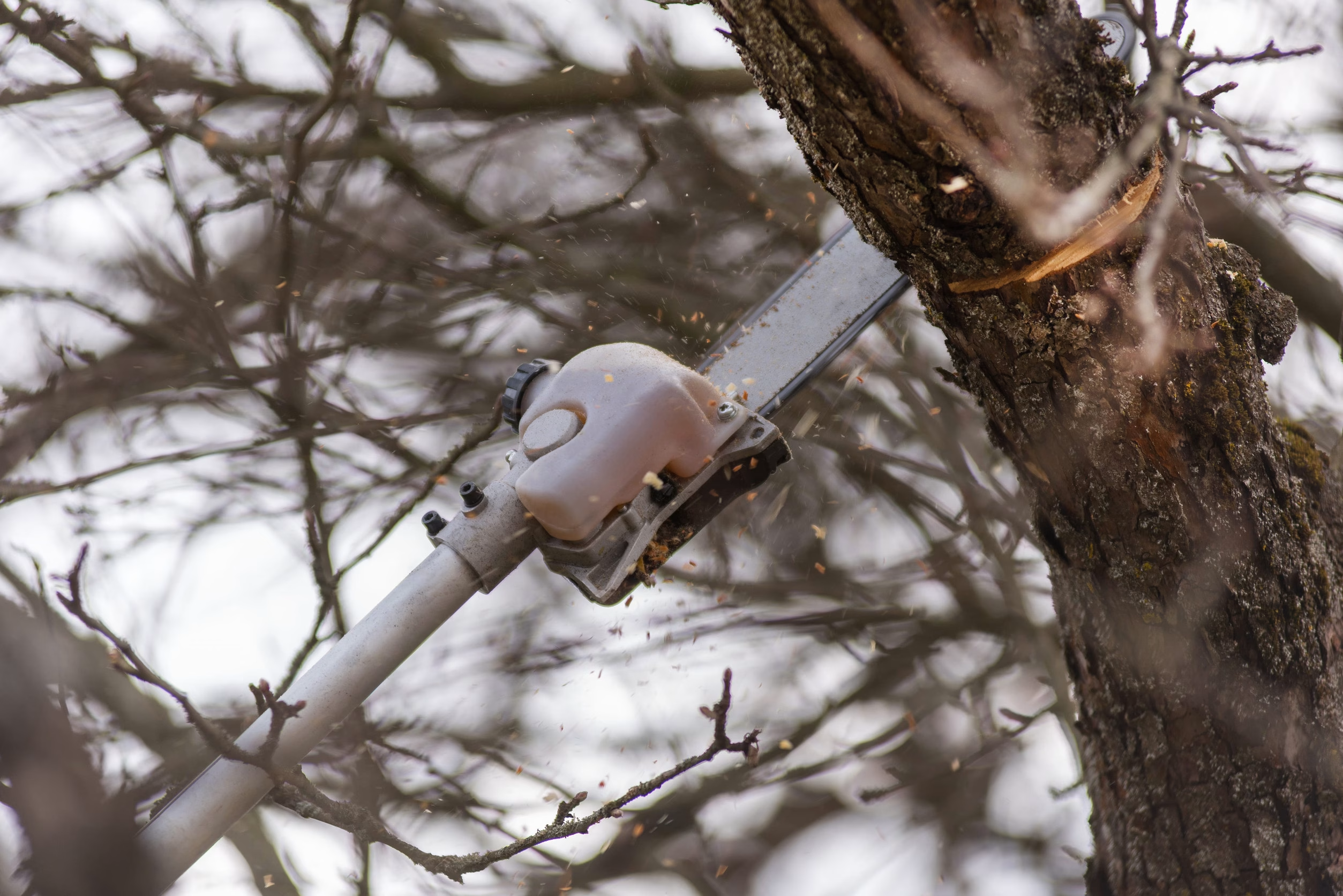
Before you hire anyone for tree trimming in Fort Mill South Carolina, ask:
-
Are you insured for property damage, liability, and workers’ compensation?
-
Will you provide a written estimate that explains what work is included?
-
Do you follow ANSI A300 pruning standards?
-
Will you top my tree, or do you use proper pruning cuts?
-
Is debris removal included?
-
Who handles any required permits?
A legitimate tree service will answer directly and without hesitation.
Why Fort Mill South Carolina Property Owners Contact Ryan’s Tree Service
Ryan’s Tree Service serves Fort Mill South Carolina and surrounding communities with tree trimming, pruning, removal, and related tree care. Our work includes maintaining clearance for sidewalks and driveways, removing hazardous limbs, and shaping trees that have outgrown their space. We also handle storm cleanup when weather brings down limbs and emergency tree services when a tree becomes an immediate hazard.
FAQs About Tree Trimming in Fort Mill South Carolina
How often should trees be trimmed?
Most trees benefit from trimming every two to five years, depending on species, growth rate, and location. Fast-growing trees may need more frequent attention, while slower species can go longer between visits.
Can I trim trees myself?
Small branches on small trees are often manageable for a homeowner. Larger limbs, anything near power lines, and work that requires climbing or working at height should be left to professionals. The risk of injury and property damage is too high for most DIY trimming.
Will trimming kill my tree?
Proper trimming does not kill a healthy tree. However, removing too much foliage at once can stress it. Topping can kill a tree or leave it permanently weakened . The key is making selective cuts that leave the tree enough foliage to sustain itself.
What is the best time of year to trim trees in Fort Mill South Carolina?
Late winter to early spring is generally ideal for most deciduous trees in South Carolina . Dead or damaged branches should be removed whenever they are noticed, regardless of season.
Does Rock Hill have rules about tree clearance?
Rock Hill requires 8 feet of clearance over sidewalks and 14 feet over streets . Trees that obstruct traffic or do not meet those clearances can be declared a public nuisance. If your tree overhangs a public walkway or street, trimming may be required, not optional.
Can you trim branches near power lines?
Never attempt to trim near power lines yourself. Only qualified line-clearance professionals should work near energized lines. If a tree is touching or close to a power line, call your utility company first.
Areas We Serve
Ryan’s Tree Service also provides tree trimming in these nearby communities:
Other Tree Services We Offer in Fort Mill South Carolina
Trimming is one part of what we do. We also handle tree removal, crane tree removal, land clearing, tree pruning, stump grinding, storm cleanup, and emergency tree services.
Get Your Free Tree Trimming Quote Today
Call Ryan’s Tree Service at 803-320-2923 to discuss what is happening on your property and request a free estimate.